Launch offer — valid today only

📄 Digital book in PDF · read it on your phone or print it

Your Boat's 12 V and 24 V DC System in Drawings One Topic on Every Page

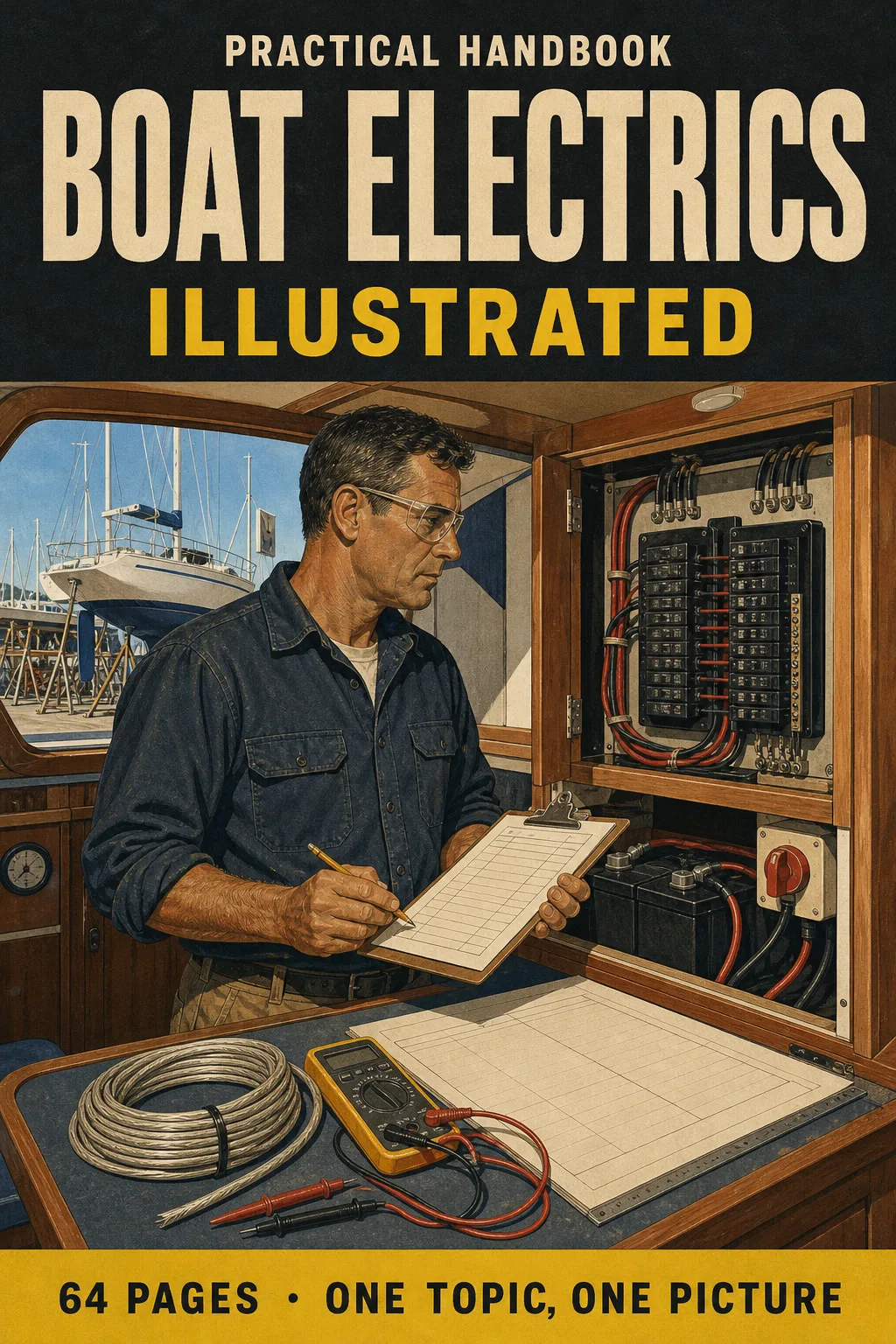
Size a cable, pick the right fuse, wire a battery bank and find why the engine won't crank. Batteries, cables in mm², fuses, the isolator, charging, solar, the switch panel and the multimeter: one topic per page, the drawing first, then the numbers. 64 illustrated pages.

GET THE BOOK + 2 BONUS BOOKS

🔒 Secure checkout · PDF by email · 30-day guarantee

Every topic, its own pageEach circuit drawn from battery to load, with the explanation beside it
64 illustrated pages9 parts, from the path every amp takes to the key numbers on one page
Up-to-date sourcesAS/NZS 3004.2, ISO 10133 and manufacturer data
PDF by emailFormat

Look Inside the Book

Every page has one big drawing and a box with the numbers and steps you need to know:

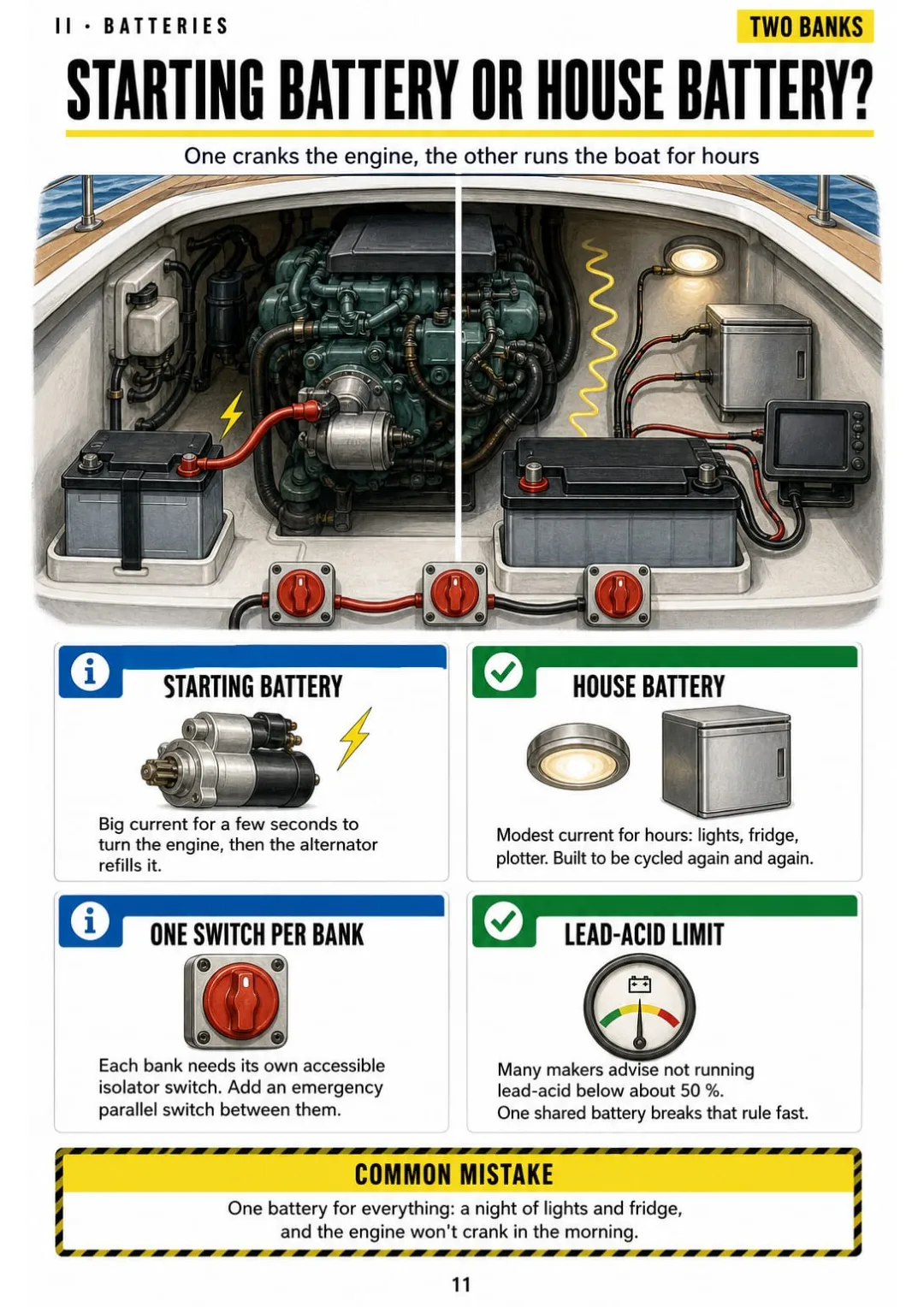
Start bank vs house bank: separate isolators plus an emergency parallel switch
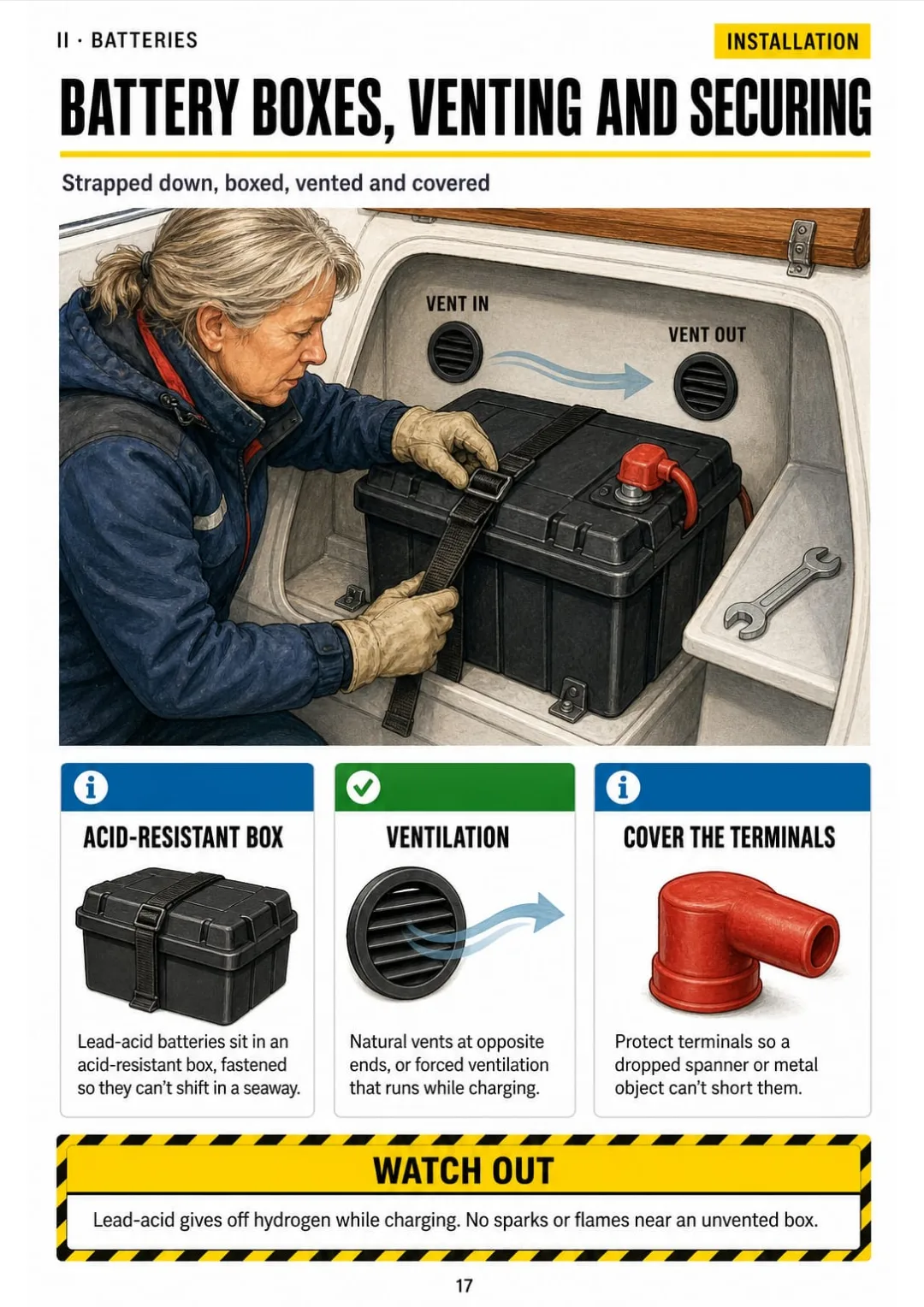
Acid-resistant box, strapped down, vents at opposite ends, terminals covered
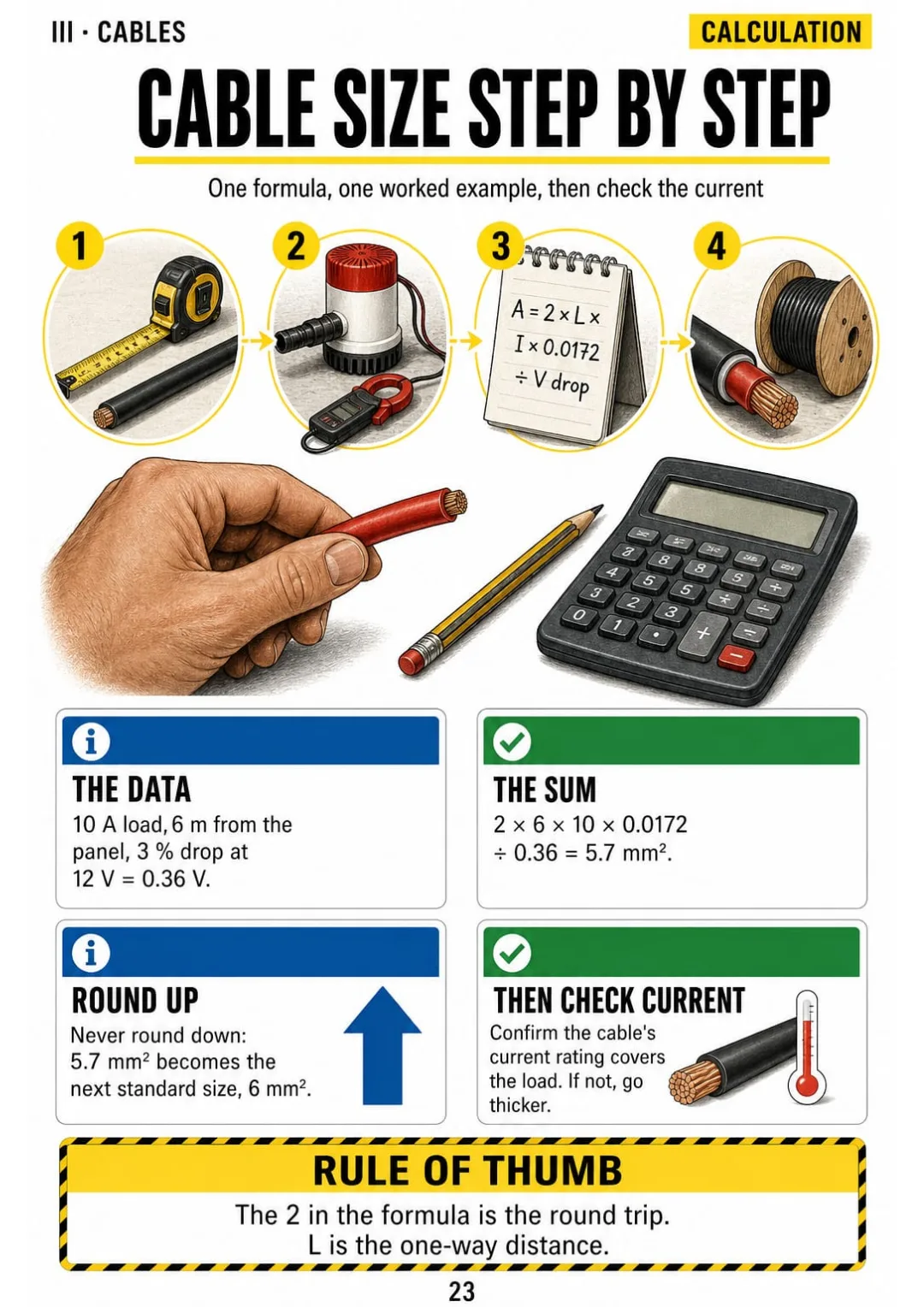
10 A, 6 m, 3 % at 12 V → 5.7 mm² → choose 6 mm²
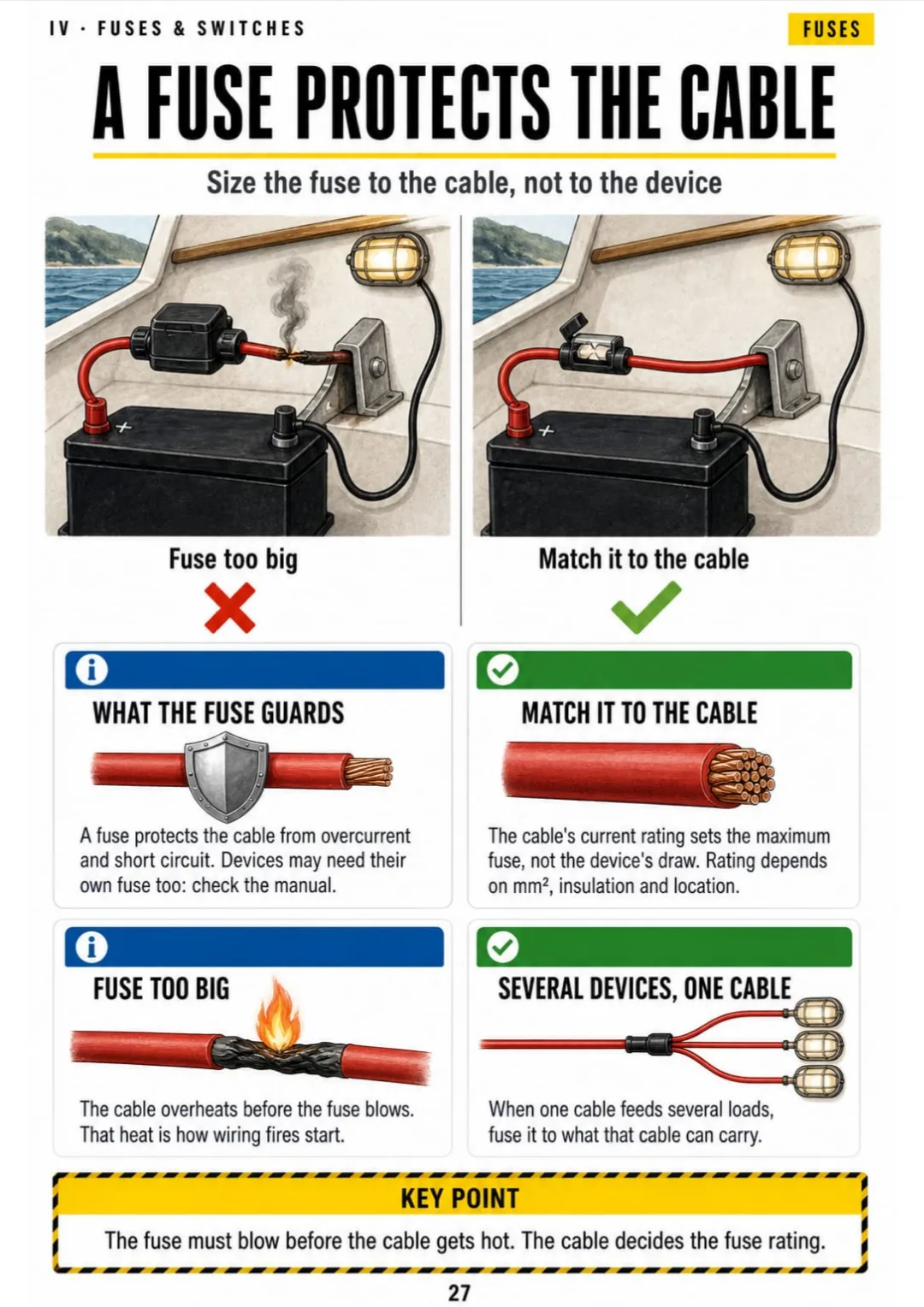
The cable's current rating sets the maximum fuse, not the device's draw.
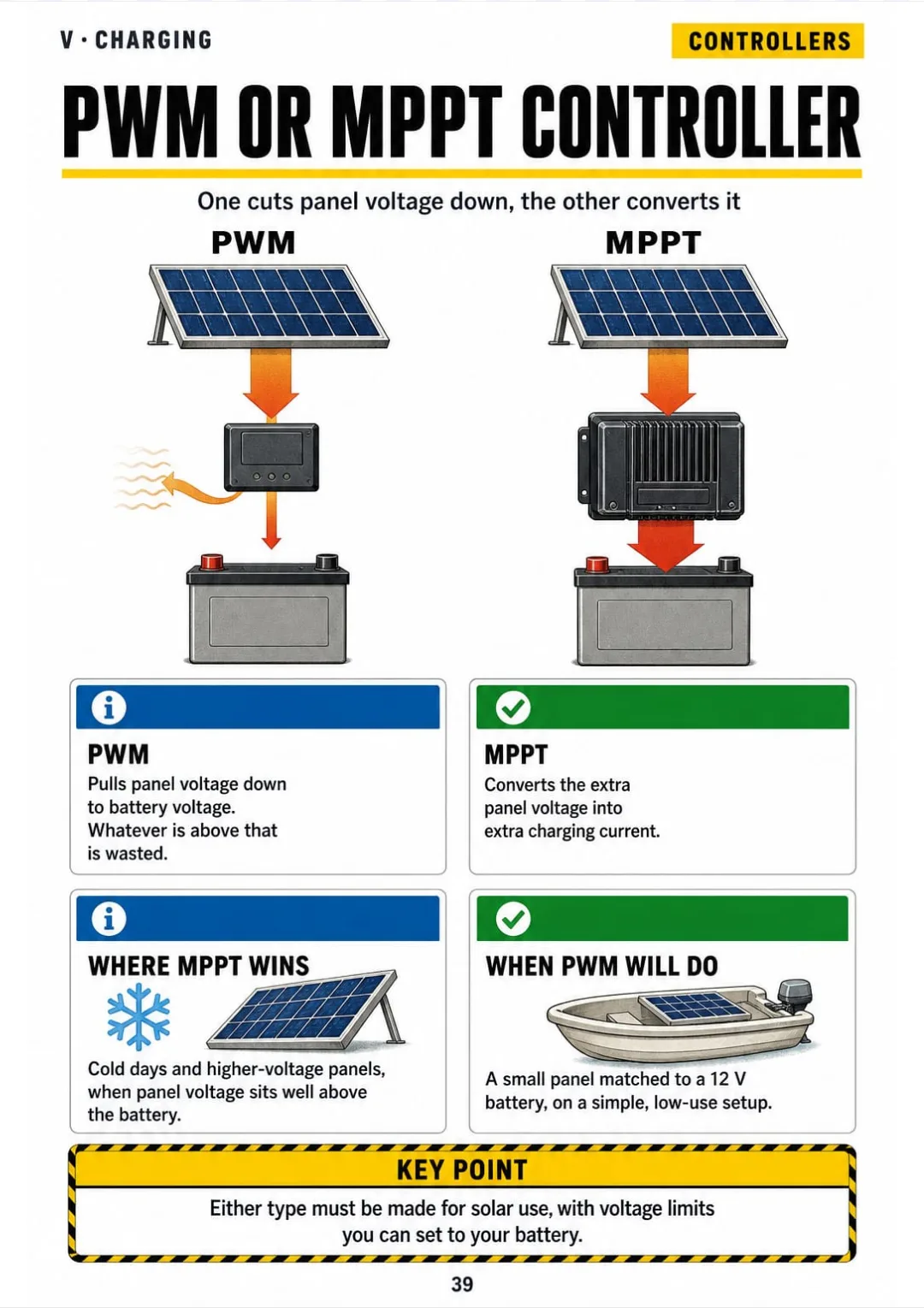
PWM cuts the panel down to battery voltage; MPPT converts the extra into current.
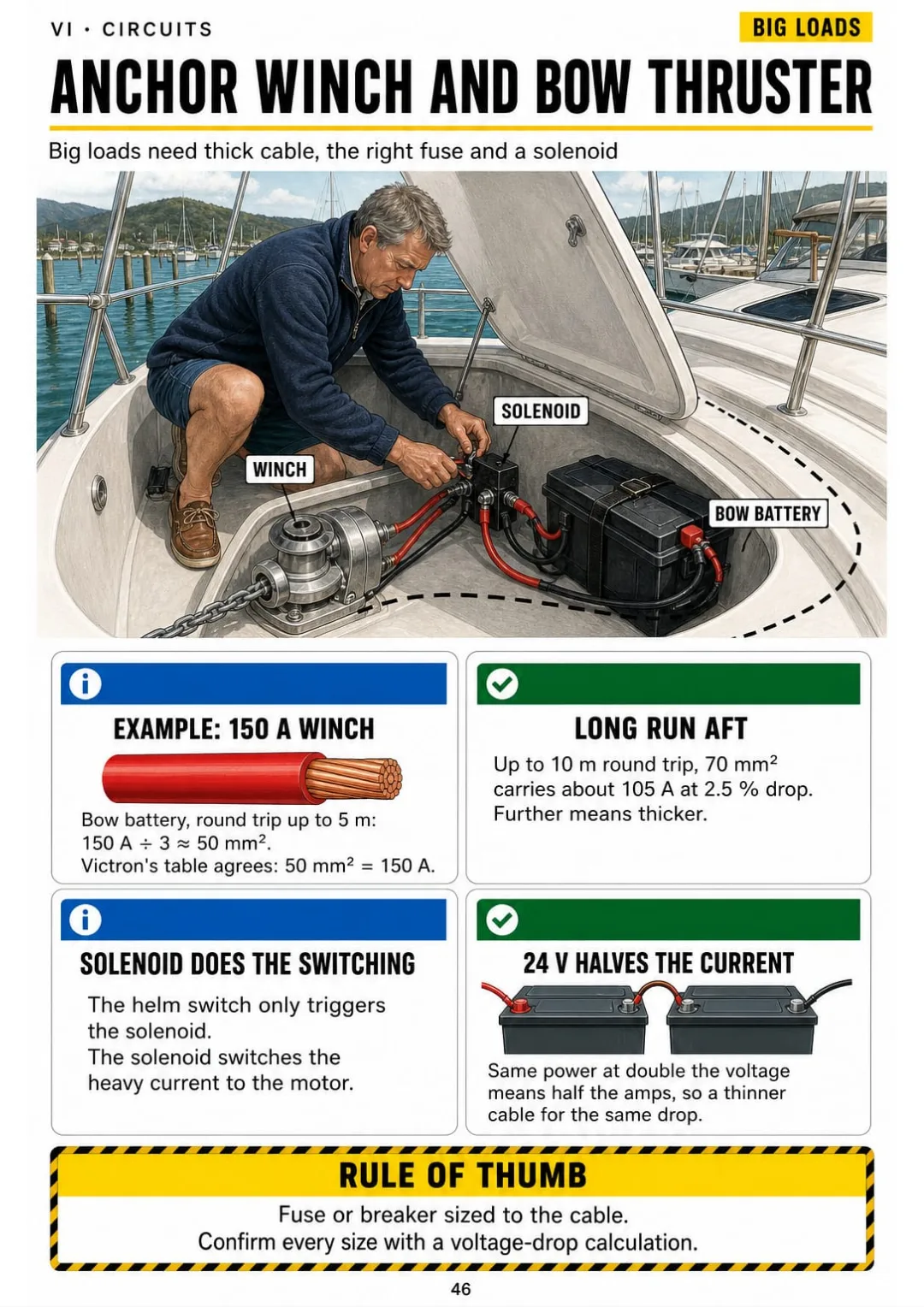
150 A winch, 5 m round trip: about 50 mm² cable, fused to the cable.
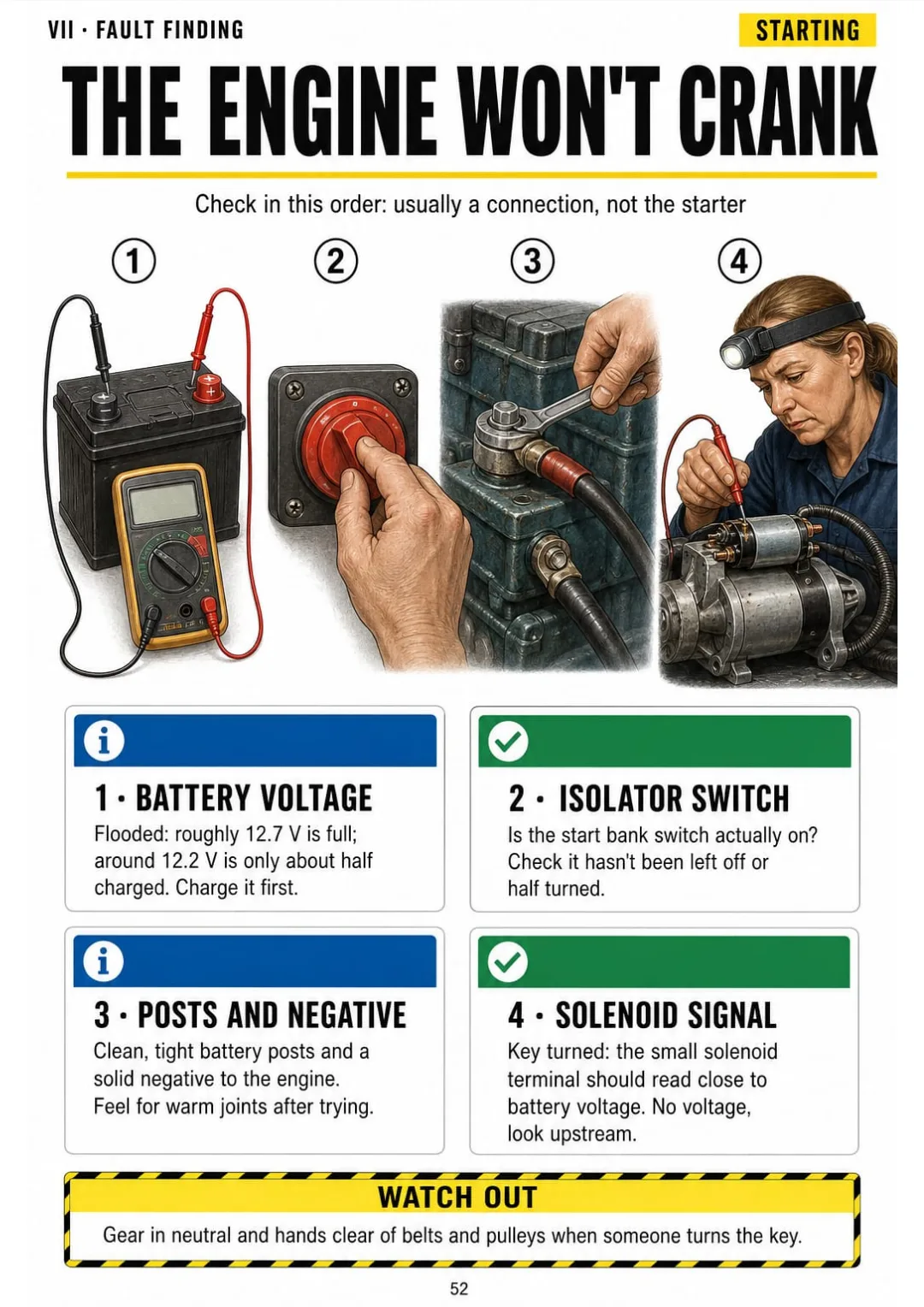
Battery, isolator, terminals and engine negative, then the solenoid: the fault is usually a connection
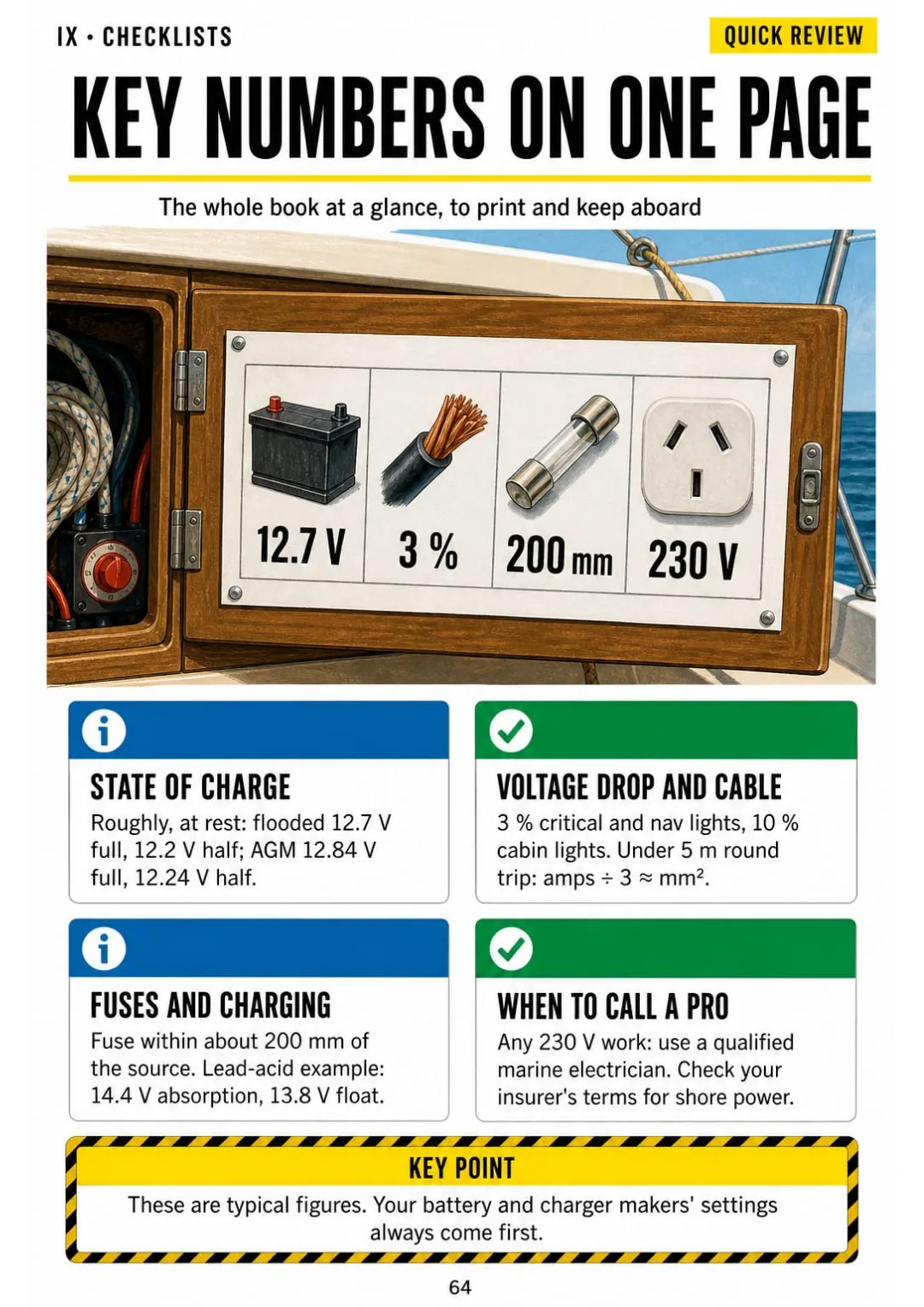
Charge voltages, voltage drop, cable rule, fuse distance and when to call a pro.

Swipe to see more →

These are real pages from the book. The table of contents is the full one: 9 parts and 60 topics.

The Problem Isn't You. It's How It Was Explained to You.

You're adding a deck wash pump six metres from the battery and you need to know what cable to run. One forum says 2.5 mm², the next one says 6.

The manual has a formula buried in three paragraphs about resistance, length and temperature. You read it, put it down, and still don't know which roll to buy.

10 A, 6 m, 3 % at 12 V → 5.7 mm² → choose 6 mm²

In the book, that same job is one page: 10 A, 6 metres, 3% drop at 12 V, worked out to 5.7 mm², so you choose 6 mm². Each step sits in its own box, in the order you do it.

Batteries in series and in parallel, where the fuse goes, the switch panel, the engine that won't crank and charging lithium from the start battery: each one has its own page too.

You see the numbers, work it out for your own run and cut the cable, without going back to the manual.

COMPARE FOR YOURSELF

The Same Topic, Two Ways to Learn It

THIS
  • The manual: line after line of text
  • Series and parallel explained only in words
  • You get back to the boat still unsure
When batteries are connected in series, the positive terminal of each unit is joined to the negative terminal of the next; the terminal voltage of the combination equals the sum of the individual voltages, while the capacity in ampere-hours remains that of a single unit. In a parallel connection, all positive terminals are joined together, as are all negative terminals; the voltage remains that of a single unit and the total capacity becomes the sum of the individual capacities, provided the units are identical in type, age and condition.
FOR THIS
  • Series and parallel in one drawing
  • The volts and amp-hours in a box
  • You see it and it makes sense
Acid-resistant box, strapped down, vents at opposite ends, terminals covered
CONTENTS

Take a Look at the 9 Parts and 60 Topics

How the DC system works, batteries and banks, cables and connections, fuses and switches, charging and solar, circuits around the boat, fault finding with a multimeter, shore power and checklists: 64 pages, all illustrated

IHow Your Boat's DC System Works · pp. 5-10
  1. The Path Every Amp Takes on Board
  2. Volts, Amps, Ohms and Watts in One Drawing
  3. Ohm's Law Without the Fear
  4. Amp-Hours: Your Battery's Fuel Tank
  5. 12 V or 24 V: Why Bigger Boats Go Higher
  6. Positive, Negative and the Earth Bus
IIBatteries and Battery Banks · pp. 11-18
  1. Starting Battery or House Battery?
  2. Flooded, AGM, Gel and Lithium Side by Side
  3. Reading State of Charge from Resting Voltage
  4. Why Lithium Voltage Tells You Almost Nothing
  5. Batteries in Series and in Parallel
  6. Wiring a Bank So Every Battery Works Equally
  7. Battery Boxes, Venting and Securing
  8. Looking After Batteries Over the Off-Season
IIICables and Connections · pp. 19-26
  1. Why Boats Need Tinned Marine Cable
  2. Cable Size in mm², Not AWG
  3. Measure the Round Trip, Not the Run
  4. Voltage Drop: 3 % or 10 %
  5. Working Out Cable Size Step by Step
  6. Crimping a Terminal Properly
  7. Ring Terminals, Studs and Busbars
  8. Routing and Supporting Cables Safely
IVFuses, Breakers and Switches · pp. 27-33
  1. A Fuse Protects the Cable, Not the Gadget
  2. Put the Fuse Close to the Source
  3. Choosing a Fuse Rating
  4. Blade, MIDI, ANL and Class T Fuses
  5. Circuit Breakers on the Switch Panel
  6. The Battery Isolator Switch
  7. Always-On Circuits: Bilge Pump and Alarm
VCharging: Alternator, Charger and Solar · pp. 34-41
  1. The Three Stages of Charging
  2. How the Alternator Charges Two Banks
  3. Why Lithium Needs a DC-DC Charger
  4. Shore-Power Battery Chargers
  5. How Much Solar Your Boat Needs
  6. PWM or MPPT Controller
  7. Wiring a Solar Panel Safely
  8. Your Daily Power Budget
VICircuits Around the Boat · pp. 42-47
  1. Reading Your Switch Panel
  2. Navigation Lights: Every Volt Counts
  3. Bilge Pumps and Float Switches
  4. Electronics: Clean Power for Plotter and VHF
  5. Anchor Winch and Bow Thruster
  6. Adding a New Circuit the Right Way
VIIFault Finding with a Multimeter · pp. 48-55
  1. Setting Up Your Multimeter
  2. Voltage-Drop Testing Under Load
  3. Finding What Drains Your Battery at the Mooring
  4. Battery, Charger or Load?
  5. The Engine Won't Crank
  6. The Alternator Isn't Charging
  7. A Light or Pump That Works Sometimes
  8. Corrosion: Spotting It and Fixing It
VIIIShore Power and When to Call an Electrician · pp. 56-59
  1. 230 V on Board: The Outline
  2. The RCD and Why You Test It
  3. Galvanic Corrosion and the Shore Earth
  4. Know When to Stop
IXChecklists and Common Mistakes · pp. 60-64
  1. Before You Leave the Berth
  2. Ten Common Wiring Mistakes
  3. Mapping Your Own Boat's System
  4. Seasonal Electrical Check
  5. Key Numbers on One Page

One Page, One Topic, All Clear

Think of it this way:

It's Saturday at the mooring, you turn the key and the engine just clicks. Your mates are already on the jetty with the chilly bin.

You open the page on the engine that won't crank and see the circuit drawn in order: battery, isolator, terminals, engine negative, then the solenoid. You check each point with the multimeter, and it's usually a connection.

PWM cuts the panel down to battery voltage; MPPT converts the extra into current.

The same goes for reading resting voltage, wiring batteries in series or parallel, sizing a cable, choosing a fuse and charging lithium: each one on its own page.

Boat Electrics Illustrated is 9 parts and 60 topics, all drawn, finishing with checklists, ten common wiring mistakes and the key numbers on one page.

What you see drawn, you don't have to memorize.

What's Inside Boat Electrics Illustrated:

Ipp. 5-10

How Your Boat's DC System Works

The path every amp takes, volts, amps, ohms and watts, Ohm's law, amp-hours, 12 V or 24 V and the earth bus.

IIpp. 11-18

Batteries and Battery Banks

Starting and house batteries, flooded, AGM, gel and lithium, state of charge from resting voltage, series and parallel, bank wiring, boxes and the off-season.

IIIpp. 19-26

Cables and Connections

Pick the right cable for any run without guessing: tinned marine cable, sizes in mm², the round trip, 3% or 10% drop, sizing step by step, crimping, terminals, busbars and routing.

IVpp. 27-33

Fuses, Breakers and Switches

Why a fuse protects the cable, fuse close to the source, ratings, fuse types, panel breakers, the isolator switch and always-on circuits.

Vpp. 34-41

Charging: Alternator, Charger and Solar

The three stages of charging, the alternator and two banks, DC-DC chargers for lithium, shore chargers, solar sizing, PWM or MPPT and your daily power budget.

VIpp. 42-47

Circuits Around the Boat

The switch panel, navigation lights, bilge pumps and float switches, clean power for electronics, anchor winch and bow thruster, adding a new circuit.

VIIpp. 48-55

Fault Finding with a Multimeter

Setting up the multimeter, voltage-drop tests, finding a drain at the mooring, battery, charger or load, no crank, no charge, intermittent faults and corrosion.

VIIIpp. 56-59

Shore Power and When to Call an Electrician

230 V on board in outline, the RCD and why you test it, galvanic corrosion and the shore earth, and knowing when to stop.

IXpp. 60-64

Checklists and Common Mistakes

Before you leave the berth, ten common wiring mistakes, mapping your own boat, the seasonal check and the key numbers on one page.

At the end of the book: Checklists, ten common wiring mistakes and the key numbers on one page.
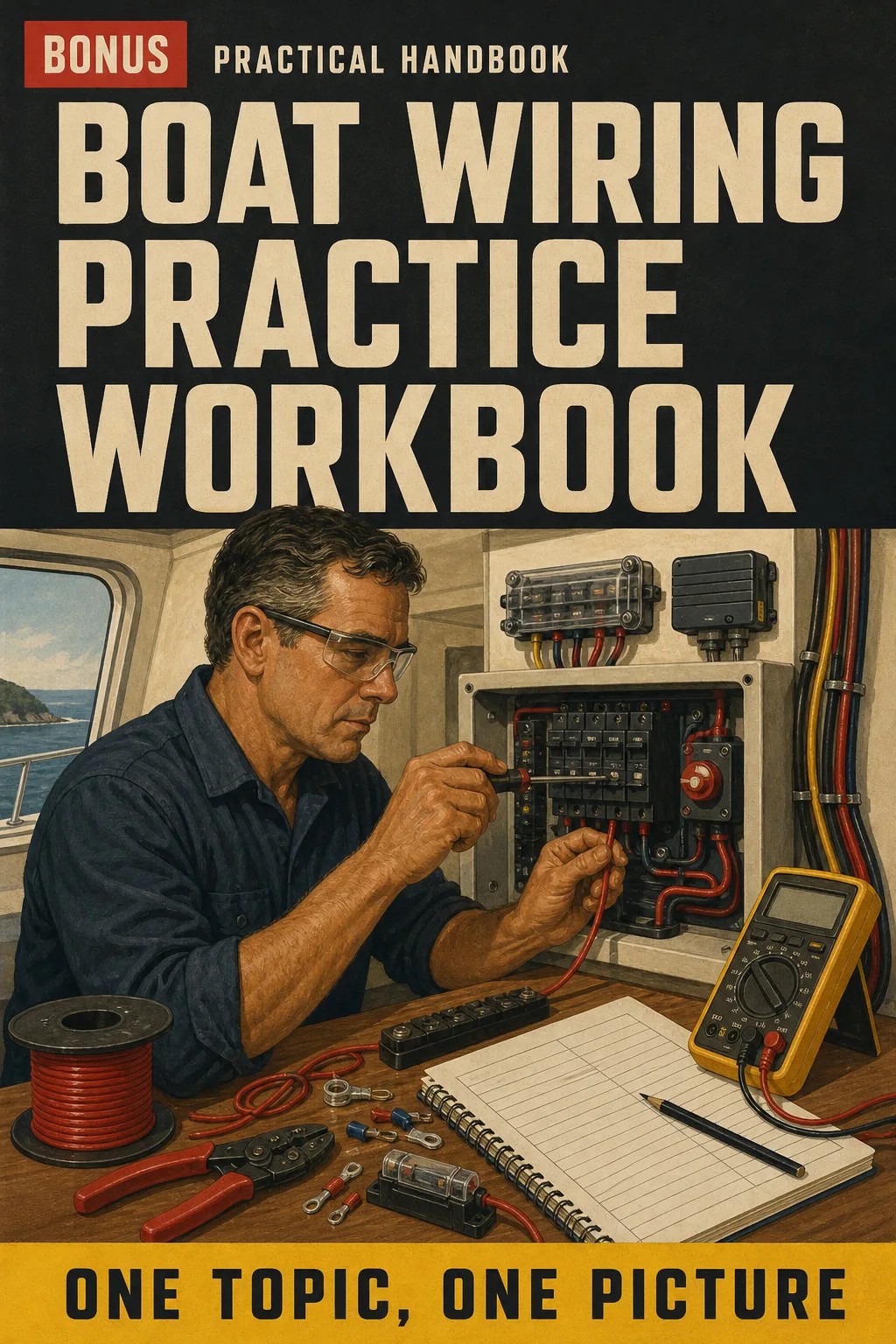
Plus: 2 Free Books

Boat Wiring Practice Workbook

BONUS 1: «Boat Wiring Practice Workbook»

Value on its own: US$ 17.90

Worked problems on cable size, voltage drop, fuse ratings and daily amp-hours, with full answers, so you can check your own numbers before you cut a single cable.

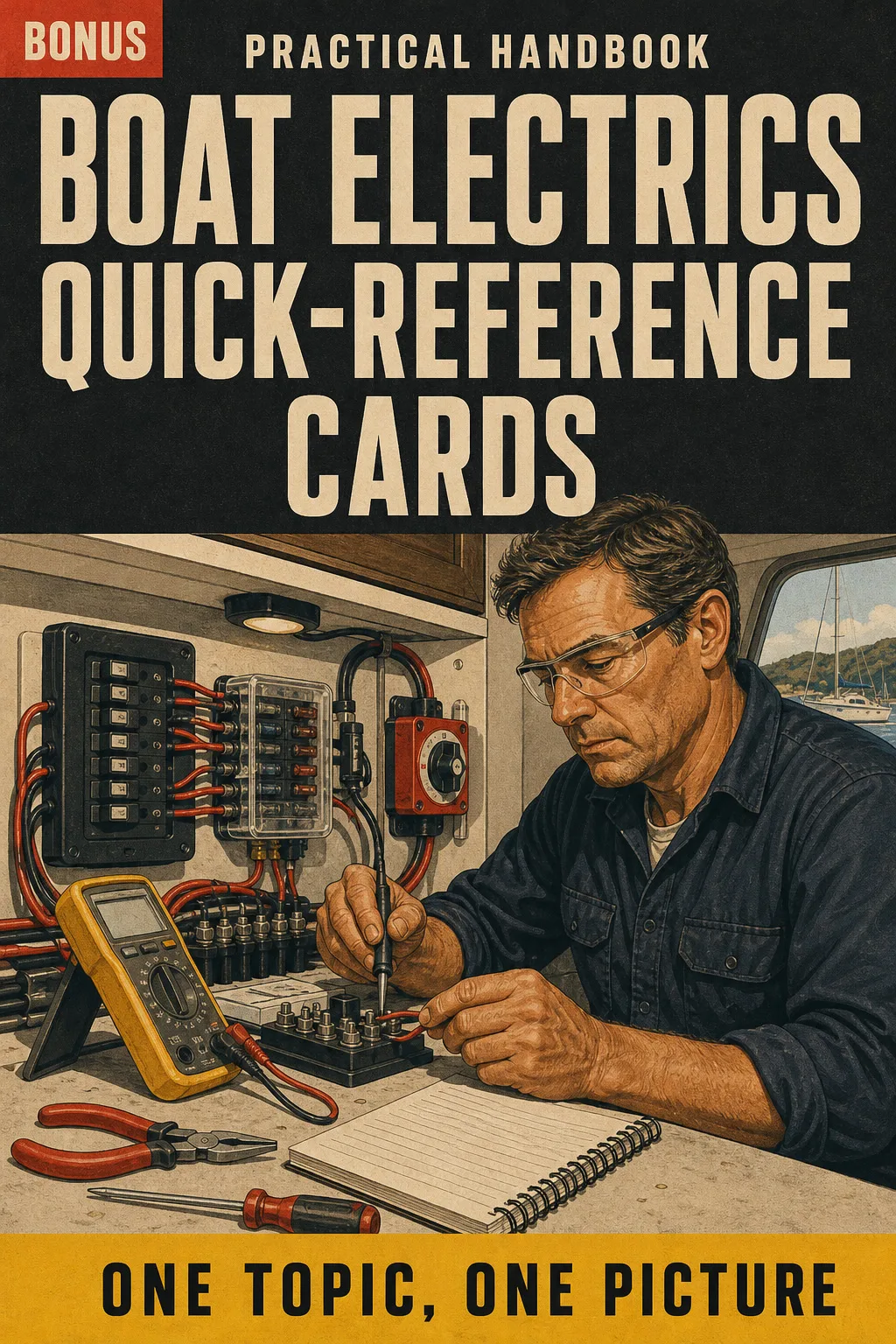
Boat Electrics Quick-Reference Cards

BONUS 2: «Boat Electrics Quick-Reference Cards»

Value on its own: US$ 14.90

Printable cards for the chart table: battery voltages, cable sizes, fuse placement and multimeter checks, so the answer is at hand when you're on board, not at home.

Boat Electrics Illustrated with 2 Free Books

  • Boat Electrics Illustrated: 64 illustrated pagesUS$ 63
  • BONUS 1: Boat Wiring Practice WorkbookUS$ 17.90
  • BONUS 2: Boat Electrics Quick-Reference CardsUS$ 14.90
  • High-resolution PDF to printIncluded
Total value US$ 95.80
YOUR PRICE:
US$ 27
You save US$ 68.80
YES, I WANT BOAT ELECTRICS ILLUSTRATED FOR US$ 27

📄 This is a digital PDF book sent to your email: nothing is printed or shipped.

Secure purchaseEncrypted payment30-day guarantee

PDF by email: We email you Boat Electrics Illustrated as a PDF, together with the two free books. It's a single payment: no installments, no extra charges.

Who This Book Is For

You look after your own boat

You look after your own boat

You finally see how your system is laid out, from the battery to each circuit, and you can sort the panel the last owners left you.

You're planning lithium or solar

You're planning lithium or solar

Before you spend on new gear, you see how each battery type charges, why lithium needs a DC-DC charger and how to work out your daily amp-hours.

You work in a boatyard or marina

You work in a boatyard or marina

Everything you picked up on the job, in order: every circuit drawn the same way and the fault-finding steps on one page each.

Everything You Get Today

US$ 95.80US$ 27
YES, I WANT BOAT ELECTRICS ILLUSTRATED FOR US$ 27

📄 This is a digital PDF book sent to your email: nothing is printed or shipped.

30DAYS
GUARANTEE

30-Day Guarantee

Try Boat Electrics Illustrated for 30 days, bonus books included.

We refund everything if the file won't open, if the book isn't what you see here, if you were charged twice or if the email doesn't arrive. Just email us.

You pay once. No subscriptions.

Frequently Asked Questions

Is it for me if I've had boats for years and do my own maintenance?

Yes. It starts from the basics but goes on to cable sizing, fuse ratings, lithium charging and fault finding. Everything is in mm², metres and amp-hours, and it covers both 12 V and 24 V systems.

Where does the content come from?

The technical points are checked against AS/NZS 3004.2, ISO 10133, the New Zealand Electrical (Safety) Regulations for the 230 V outline, and battery and charger manufacturer data.

Is it official material?

No. It's an independent illustrated book. It refers to those standards to explain what they cover, without reproducing them and without any affiliation or endorsement.

Does it replace a course or a marine electrician?

No. It helps you understand and work on your DC system. For 230 V shore power, or when in doubt, the book tells you to call a qualified marine electrician.

Does it cover lithium batteries and 24 V systems?

Yes. Lithium has its own pages: how it charges compared with flooded, AGM and gel, and why it needs a DC-DC charger off the start battery. Battery banks, cable sizing and voltage drop are worked out for both 12 V and 24 V. The workbook problems, with full answers, let you check your own numbers.

When and how do I get it?

The book and the 2 bonus books come as PDFs by email, to the address you enter at checkout.

Do I have to pay every month?

No. It's a one-off payment, with no subscription.

Can I have it on paper?

Yes. The PDF is ready to print, so you can keep it at the chart table or in the toolbox.

How does the refund work?

You have 30 days. We refund everything if the file won't open, if the book isn't what you see on this page, if you were charged twice or if the email doesn't arrive: just email us.

Before You Close This Page

No more rereading forum threads that disagree.

Cable sizes, fuses and battery banks: you see them drawn, and that's it.

You get on board knowing where everything is.

Drawings make studying faster.

The book is right below.

One-time payment: US$ 27 · Guarantee: 30 days · PDF by email

YES, I WANT BOAT ELECTRICS ILLUSTRATED FOR US$ 27

📄 This is a digital PDF book sent to your email: nothing is printed or shipped.